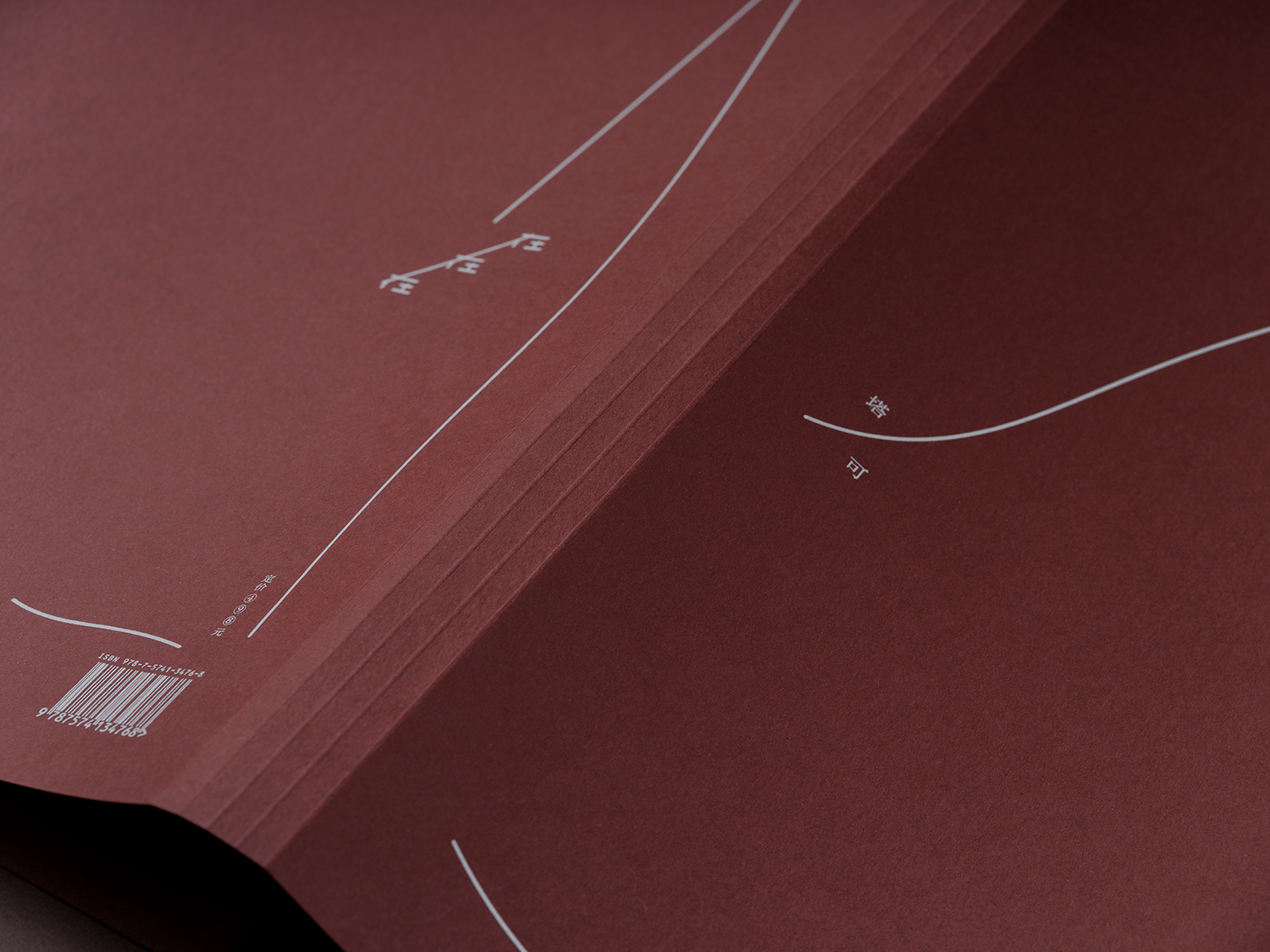
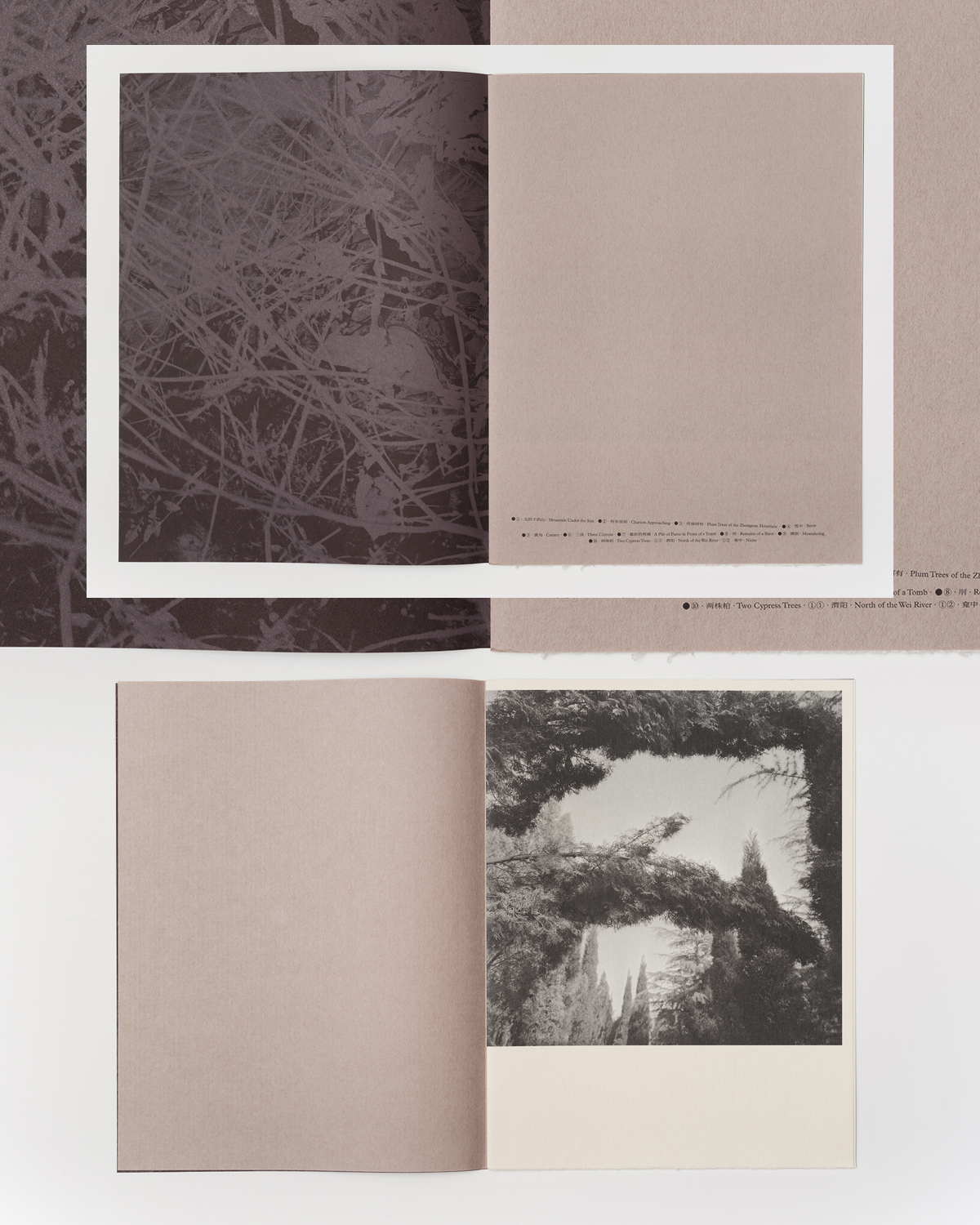
Photographer Taku revisits the mountains, rivers, and historical traces described in the Book of Songs. The design continues the exploratory spirit of the work. Instead of adopting a conventional binding, the book is deconstructed into nine separate sections of loose sheets, transforming it into a space that can be unfolded, juxtaposed, and recomposed.
Photography itself is a form of imprinting. We hoped this project would be not merely a book, but an artistic vehicle with the presence of an “original” work—where traces of light coexist with the tactile experience of reading. The lines across the pages echo the brushstrokes of landscape painting. The ancients had their own way of seeing mountains and waters; we attempt to “translate” that sensibility through a contemporary visual language, allowing poetry and reality to converge again within the design.
The artist remains acutely attentive to the relationships between images—their sequence, scale, and rhythm. The design respects this subtle order while inviting space to participate, enabling the work to generate new meanings as it shifts between modes of display and reading.
摄影家塔可对《诗经》中山川、河流与遗迹的再访。设计延续作品的探索性,没有采用传统装订,而是将全书拆解为九个章节的散页,使书籍成为可被展开、并置与重新组合的空间。
摄影本身是一种转印的方式。我们希望这部作品不仅是一册书,而是一件具有“原作感”的艺术载体,让光的痕迹与触觉的阅读共存。书页上的线条如同山水画的笔触。古人有他们看山水的方式,我们则尝试以当代的视觉语言去“翻译”那种感受,使诗意与现实在设计中重新交汇。
艺术家对图像间的关系——前后、大小与节奏——始终保持敏感。设计尊重这种微妙秩序,同时让空间参与其中,使作品在展示与阅读的转换中不断生成新的意义。